
Khao Sok National Park
One of the oldest and most diverse rainforest habitats on earth, and a story that starts under the sea.
280 million years in six chapters
From a Permian coral reef to the dam that made Cheow Lan Lake.
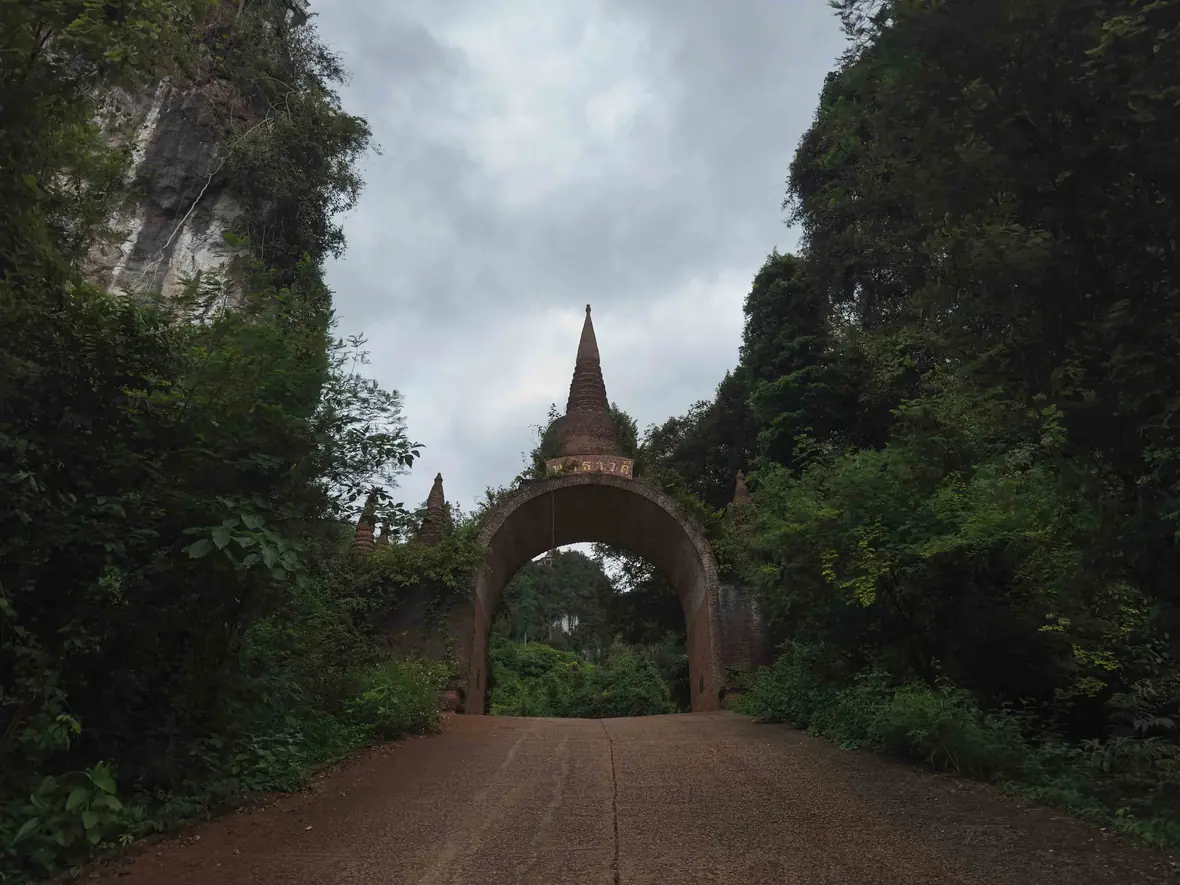
Khao Sok’s dramatic limestone cliffs were once part of a vast coral reef system stretching across much of Asia during the Permian period. This prehistoric reef was estimated to be five times the size of the Great Barrier Reef. Over millions of years, geological shifts and erosion transformed the seabed into towering karst formations. Even today, marine fossils can be found at the peaks of these cliffs, serving as a reminder of the region’s ancient underwater past.
During the Ice Age, lower sea levels allowed humans and wildlife to migrate from what are now Borneo, Sumatra, and Malaysia into southern Thailand. This led to the first human settlements in Khao Sok, where nomadic hunter-gatherer communities thrived within the dense forests. The Sakai people, who still inhabit remote parts of the Thai-Malay border and Sumatra, are believed to be the descendants of these early settlers.
Ancient trade routes once passed through the narrow Isthmus of Kra, linking merchants from the Greek and Roman empires to Southeast Asia. Instead of sailing around the Malay Peninsula, traders transported goods overland between the Andaman Sea and the Gulf of Siam. Archaeological discoveries in and around Khao Sok, including Persian pottery, Chinese porcelain, and coins with ancient Indian inscriptions, indicate the area’s historical importance in global commerce.
As Burmese invasions ravaged Thailand’s coastal settlements, many locals fled inland and found refuge in the mountains of Khao Sok. The region’s lush forests and rich biodiversity provided them with food and shelter, allowing communities to flourish. Farming, particularly rice cultivation, became an essential part of life in the surrounding lowlands.
Khao Sok’s dense jungles became a stronghold for student activists and communist insurgents fleeing political persecution in Bangkok. The rugged terrain and deep caves provided ideal hideouts, making it nearly impossible for the military to drive them out. Ironically, their presence deterred logging, mining, and poaching—preserving the pristine rainforest that still exists today.
In 1980, Khao Sok was designated a national park to protect its rich ecosystem. However, just two years later, the Thai government and the Electricity Generating Authority of Thailand (EGAT) approved the construction of Ratchaprapha Dam. Completed in 1987, the 94-meter-high dam flooded the valleys, creating the breathtaking Cheow Lan Lake. The project displaced 385 families from Ban Cheow Lan village and led to the loss of over 50 species of fish that could not survive in still waters. While the dam drastically altered the region’s ecosystem, the resulting lake is now one of Thailand’s most scenic landscapes, attracting visitors from around the world.
Today
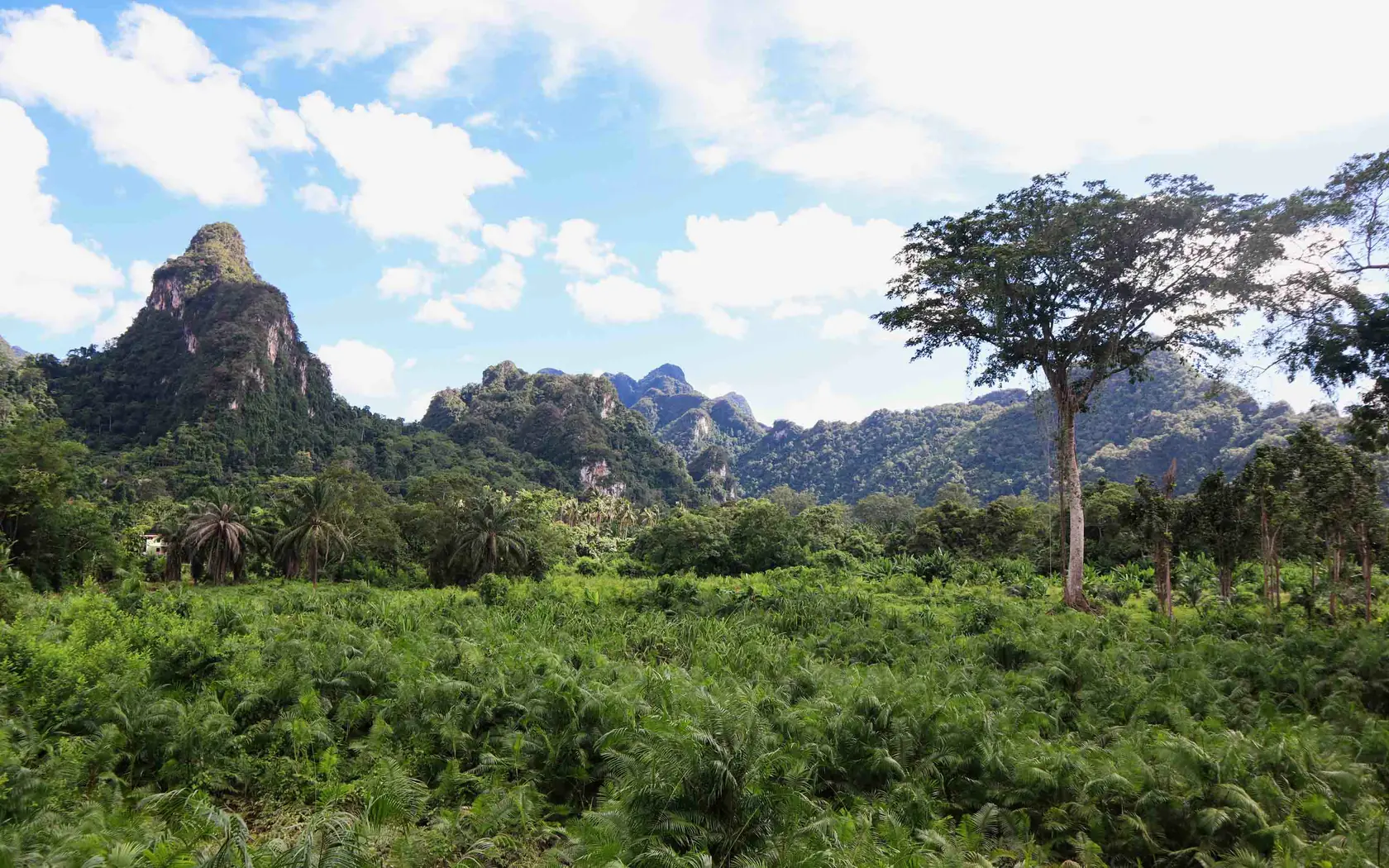
Covering an area of 739 km², including the 165 km² Cheow Lan Lake, Khao Sok National Park is a habitat even older than the Amazon rainforest.